


Your shopping cart is empty!
Hot pepper "Kilian" : 50 000 SHU
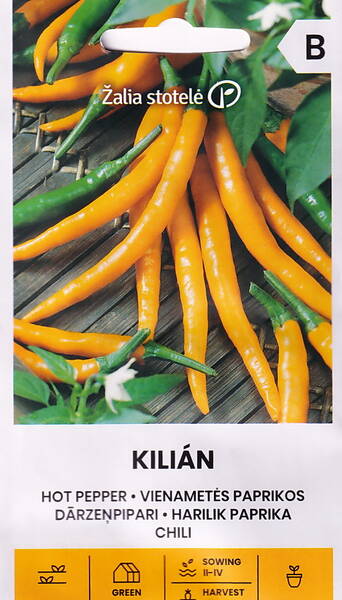
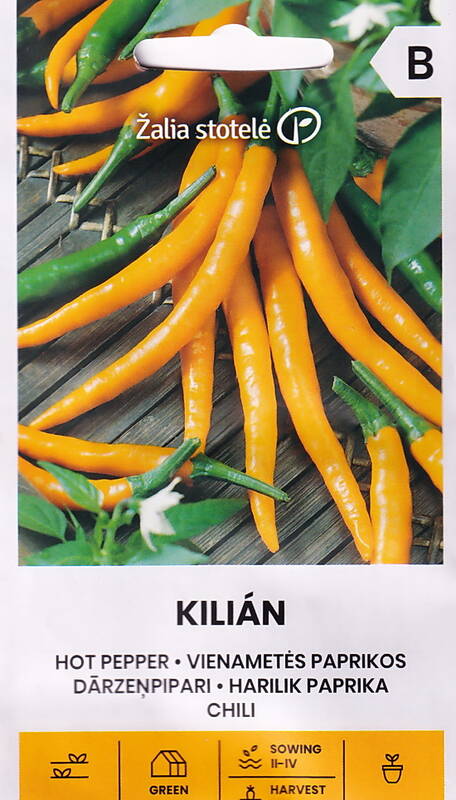
Chile Pepper "Kilian".
For thrill seekers!
Medium early variety of spicy chilli. Fruits can grow to 8 cm long, with 3 mm thick skin, orange when ripe.
The fruits are elongated-cone-shaped, orange, aromatic, with a very pungent taste.
Value of the variety: abundant and long-lasting fruiting, high decorativeness of plants. Recommended for fresh consumption, for preparing seasonings, drying, and canning.
Optimal temperatures for seed germination +22+25˚C.
Seeds germinate within 14-22 days. Grown in greenhouses and outdoors, can be grown in pots. Seedlings are planted outdoors after frost.
1 g contains about 150 seeds.
Harvesting Secrets:
A feature of chili is the gradual ripening of the crop. This is its advantage: the fruits can be consumed both fully ripe and technically ripe (unripe).
Taste nuance: the riper the peppers (orange), the hotter their taste and the more sweetness they contain.
Closer to autumn, it is recommended to harvest chilies in an unripe state. This will not affect the quality (they will ripen indoors), but the plant, freed from the load, will have time to form an additional crop.
Important: When picking peppers, it is better to pinch them off or carefully cut them with scissors. Pulling them off the bush can damage brittle branches and put the plant in a state of stress.
Culinary Application:
Chili pepper is used in several forms: dried, withered (sun-dried), and fresh.
1. Spices: Ground chili is added to spice mixtures, which not only complement each other but also enhance the aroma.
2. In hot dishes: It is added to sauces, stews, broths, soups, borscht, and pizza.
3. Canning: Excellent for pickling/marinating.
4. Freezing: Suitable for freezing, but before placing in the freezer, the pods should be kept in boiling water for three minutes or lightly fried.
5. Decor: This product is also good in a withered form. Hung by the tails (strung on a thread), it not only retains its beneficial properties all winter but also serves as a colourful decoration for the kitchen.
For thrill seekers!
Medium early variety of spicy chilli. Fruits can grow to 8 cm long, with 3 mm thick skin, orange when ripe.
The fruits are elongated-cone-shaped, orange, aromatic, with a very pungent taste.
Value of the variety: abundant and long-lasting fruiting, high decorativeness of plants. Recommended for fresh consumption, for preparing seasonings, drying, and canning.
Optimal temperatures for seed germination +22+25˚C.
Seeds germinate within 14-22 days. Grown in greenhouses and outdoors, can be grown in pots. Seedlings are planted outdoors after frost.
1 g contains about 150 seeds.
Harvesting Secrets:
A feature of chili is the gradual ripening of the crop. This is its advantage: the fruits can be consumed both fully ripe and technically ripe (unripe).
Taste nuance: the riper the peppers (orange), the hotter their taste and the more sweetness they contain.
Closer to autumn, it is recommended to harvest chilies in an unripe state. This will not affect the quality (they will ripen indoors), but the plant, freed from the load, will have time to form an additional crop.
Important: When picking peppers, it is better to pinch them off or carefully cut them with scissors. Pulling them off the bush can damage brittle branches and put the plant in a state of stress.
Culinary Application:
Chili pepper is used in several forms: dried, withered (sun-dried), and fresh.
1. Spices: Ground chili is added to spice mixtures, which not only complement each other but also enhance the aroma.
2. In hot dishes: It is added to sauces, stews, broths, soups, borscht, and pizza.
3. Canning: Excellent for pickling/marinating.
4. Freezing: Suitable for freezing, but before placing in the freezer, the pods should be kept in boiling water for three minutes or lightly fried.
5. Decor: This product is also good in a withered form. Hung by the tails (strung on a thread), it not only retains its beneficial properties all winter but also serves as a colourful decoration for the kitchen.
* South American Indians have long used pepper instead of salt. Spanish travelers of the last millennium were surprised to notice that with meat and fish dishes they used a certain sauce made from tomatoes, hot peppers and pumpkin seeds, the main advantage of which was the complete absence of heat treatment...
It's called "salsa" (like the fiery Latin American dance...)